






First, e-commerce was set to kill off the brick-and-mortar store. Then mobile shopping would finish the job. Next came the pandemic, and the doomsayers had a field day. But with each wave of disruption, the store survived.
Now agentic AI is putting a personal shopper in every consumer’s hands. Not only will an AI agent know your shopping habits and personal preferences, it can recommend a product, make the sale and arrange shipping in seconds. Surely this will spell the demise of the physical store once and for all, right?
Wrong, says Kiri Masters—and, in fact, agentic AI is poised to reposition in-store digital at the heart of the retail media ecosystem.
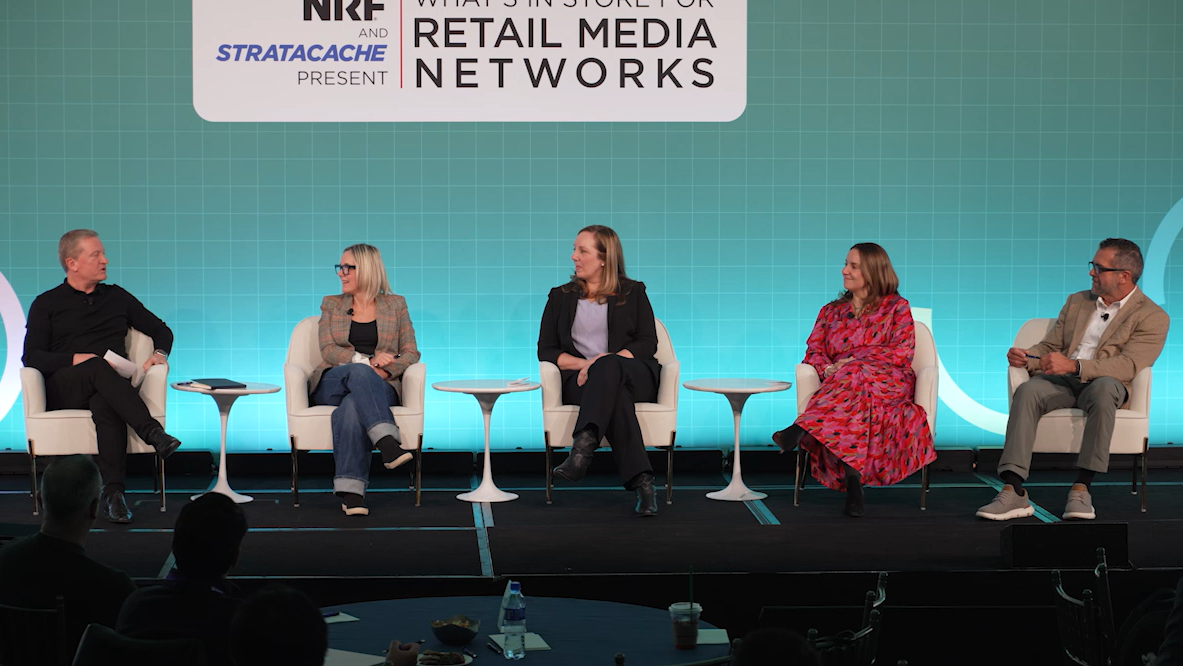
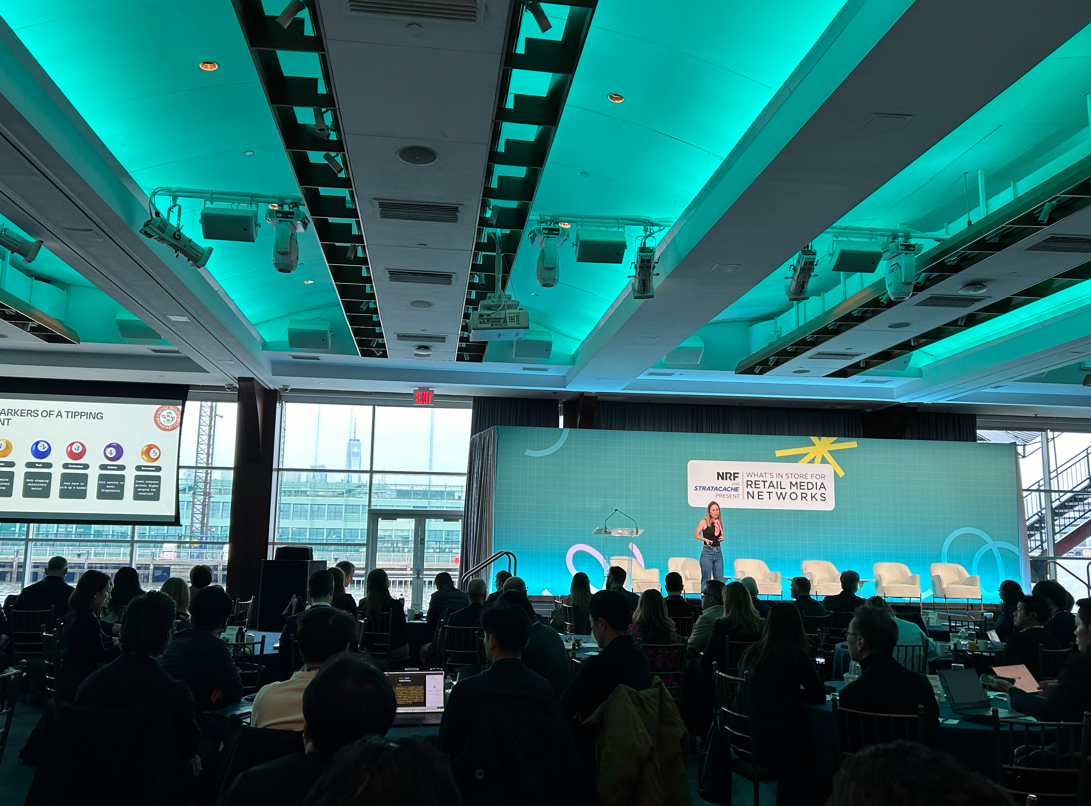
That was the argument Kiri brought to the NRF’s What’s In Store for In-Store for Retail Media Networks event in New York City in January 2026. An industry analyst, speaker and host of the daily Retail Media Breakfast Club podcast and newsletter, Kiri has spent a decade examining the economics of how brands reach shoppers. Her session didn’t just forecast agentic AI’s impact. It explained which retail media stakeholders stand to win and lose—and why the clock is ticking.
“We don’t get to decide if these shifts happen,” Kiri told the more than 550 retail media stakeholders attending her much-discussed session. “But we do get to decide when we notice them. And noticing them early is the closest thing that you have to an advantage.”
History Doesn’t Repeat, It Rhymes
To chart an agentic AI-driven future, Kiri looked to the history lessons of the past. “Every major shift,” she told the NRF audience, “creates winners who get in early while the paint is wet, and casualties who wait for the writing to already be on the wall.”
Case study one: In 1916, Clarence Saunders upended grocery retail with the creation of Piggly Wiggly—the first self-service store. Before it, clerks filled every order behind a counter, obscuring prices and letting them substitute their preferred brands. Saunders let shoppers select their own items, see prices before paying, and settle in cash at the register. The model slashed labor costs and ran healthier margins. Competitors adapted or went bust.
Case study two comes a century later. In 2015, from her perch inside a New York marketing agency, Kiri saw the same dynamic play out. Amazon was rewriting the rules of online retail and she tried to convince consumer brands to take its bottom-barrel business model seriously. Most dismissed it as a discount channel unworthy of premium products. Early movers disagreed—and built expertise that laggards couldn’t close the gap on.
Today an agentic AI reset is in motion—and it’s poised to cut deeper than either the Piggly Wiggly or Amazon, Kiri cautioned. Why? Because it operates on cognition, not just convenience.
When AI Collapses the Funnel
Previous shifts changed where and how people shopped. Agentic AI has the potential to change who does the shopping. Where yesterday’s chatbot helped a shopper research and compare options, a trusted AI agent may actually pick the perfect product, recommend it based on their preferences and habits, and make the sale, cutting out the retailer entirely.
Today’s AI is already reshaping consumer behavior. Consumer brands report a 20 percent drop in traffic to their product detail pages, with no plausible explanation beyond shoppers conducting research inside ChatGPT, Gemini and the like before arriving at a retailer’s site to close the sale. As of January 2026, 41 percent of consumers say they have used AI platforms for product discovery—and 33 percent say they have fully jettisoned their old comparison-shopping habits.
What does this mean for retail media’s traditional funnel model—strategically placed ads raising awareness, reinforcing consideration and ultimately sparking conversion?
The vast majority of retail media spending, Kiri noted, goes to onsite and offsite advertising: Sponsored listings and search placements on retailer websites, social media, programmatic channels and DOOH displays.
That model was built on browsing: a consumer scrolling, strolling or channel surfing, pausing, getting intercepted mid-consideration. But AI agents collapse that funnel, creating a one-stop shop for product discovery, persuasion and purchase at the moment of intent.
In-Store Takes Center Stage
The one retail media channel that agentic AI will help, rather than hurt, is in-store digital advertising. “As brands and advertisers see traffic to retailers’ dotcoms dwindle,” Kiri predicted, “they’re going to be looking for new ways to reach in-market shoppers at the point of purchase—and in-store retail media provides that surface for them.”
The data backs her up. It shows that AI is fast becoming a companion to the physical journey, not a bypass of it. Fifty-four percent of shoppers say digital assistants save them time when shopping in-store, according to Walmart’s 2025 Retail Rewired Report. Thirty percent of global consumers already use AI assistance while shopping in brick-and-mortar stores, according to a Salesforce study; among Gen Z and millennial shoppers, that figure hits 40 percent. And where that generation shops, advertising budgets follow.
It was a message that the NRF crowd took to heart as they considered future investment of, and creative strategy for, their retail media budgets. The window Kiri described—the one where early movers can leap far ahead of the late arrivals—is open now, but not indefinitely.
All of the sessions from What’s in Store for Retail Media Networks are now available.