






For years, retail media investment has been driven by a singular premise: Shoppers make their purchase decisions before they enter the store. Spend on online ads, social media content and DOOH campaigns, then hope that those impressions convert when they push their cart through a retailer’s doors.
But new research from U.K. retail giant Tesco is upending that conventional wisdom. “Moving Mindsets,” a new behavioral study by Tesco Media in partnership with consultancy MTM, reveals that only 24% of products are bought on a regular basis.
The research, based on surveys of over 7,000 shoppers, finds that 71% of in-store buying represents new, lapsed or occasional purchases—meaning the majority of the basket is still open to influence while people shop.
Chris McLelland, Director of Business Development, EMEA at STRATACACHE, calls the research “an important and timely contribution that reinforces how central the store remains to modern commerce—and how misunderstood its role still is.”
The Shopper’s Shifting State of Mind
Recent industry research has shown that the physical experience of shopping is a major draw for consumers. Almost two out of three shoppers say that they enjoy browsing aisles and being immersed in products inside a brick-and-mortar store, according to the Path to Purchase Institute.
Tesco’s “Moving Mindsets” study connects the dots between the pleasure of the browsing experience and shoppers’ on-the-fly decisions about what ends up in their carts.
The research identifies seven distinct shopper mindsets and finds that people move fluidly between them. Nearly 80% of shoppers change mindsets at least once during a single trip, experiencing on average 2.5 different mindsets from entry to checkout. Half of shoppers switch from “functional” to “emotive” mindsets at some point during their shop.
The study frames the store as a “Constant Inspiration Ecosystem”—a space where the real-time flow of emotive states shapes purchasing decisions. Nearly half of the grocery journey—46%—is spent in what the research calls inspiration-seeking mindsets, with 45% of shoppers discovering new products during the shop itself.
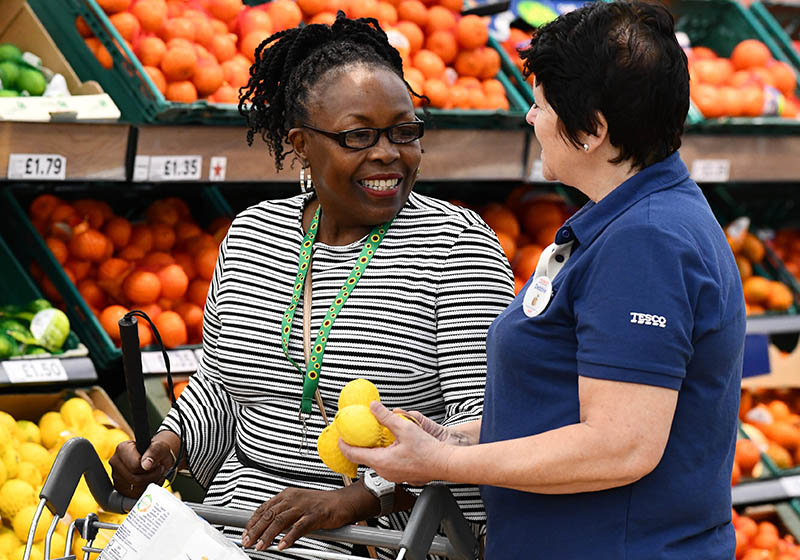
“The supermarket isn’t just a place where decisions are finalized; it’s a place where they are formed,” says Stacy Gratz, Sales and Marketing Director at Tesco Media. “This research shows that shoppers are curious, eager to discover new products, and open to inspiration throughout their journey.”
Influence at the Point of Decision
If brands and retail media buyers take only one data point from the study, it should be this: Seven in ten shoppers make their final buying decisions in the store, not before. It’s an insight that demands a fundamental rethink of how retail media resources are allocated.
“The store is not just where transactions occur. It’s where attention meets and influences conversion,” Chris notes. “With nearly 80% of shoppers shifting mindsets during a single trip, in-store marketing matters more than many models assume.”
The upshot for brands: Digital screens in stores are more than just media surfaces—deployed strategically, they can become mindset levers to inspire on-the-spot sales conversion.
“Brands need to be part of the Constant Inspiration Ecosystem that influences buyer behavior before and during the shop,” Stacy explains. “When brands show up with the right message at the right moment, they can shift shoppers into a more open, discovery-led mindset.”
And that influence extends beyond the endemic brands lining store shelves. The study also reveals that 78% of shoppers are open to contextually relevant advertising from non-endemic brands—financial services, entertainment, travel, and healthcare.
For retailers, the opportunity is to leverage first-party data gleaned from loyalty programs to influence shifts in shoppers’ mindsets. Loyalty data enables retailers to understand not just who their customers are, but when they’re most receptive to inspiration while shopping.
Retailers who can offer brands and marketers this behavioral data to influence shoppers’ mindset shifts will be poised to capture advertising spend that is now overwhelmingly allocated to online channels. It’s a chance for stores to leverage what makes them unique—spaces where the openness to inspiration can convert in the moment to a purchase.
“Ultimately, the store is still the most powerful decision engine in commerce,” Chris says. “The opportunity now is to make it a programmable influence layer, fully embedded into brands’ overall marketing strategies.”
The conventional wisdom about shoppers’ in-store behavior is not outdated, Tesco’s research makes clear—it’s just plain wrong. When they walk into a store, shoppers are open to inspiration. It’s up to retailers, brands and marketers to provide that inspirational spark where it matters most.